
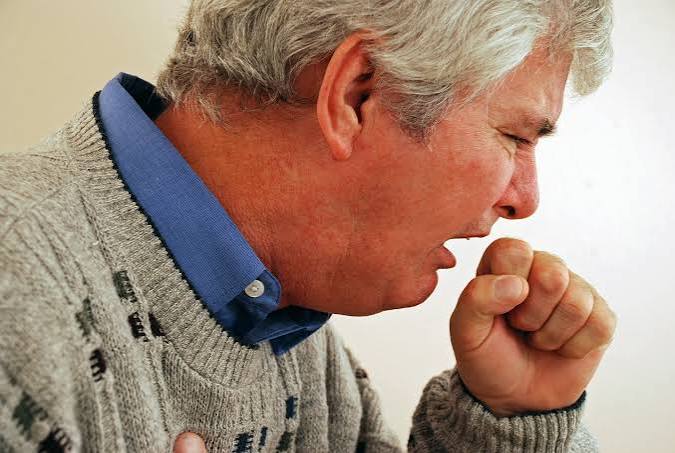
The cold is gone, but the cough just won’t go away.
Maybe it’s been two, three, or even four weeks since you were sick. Your energy is returning, your congestion has cleared, and you feel mostly back to normal. But there’s still that irritating cough. Sometimes a little mucus comes up, but it’s thick, sticky, and difficult to clear. Other times, taking a deep breath, talking, or going outside into the cold air triggers another coughing spell.
You’re not alone. A lingering cough following a respiratory infection is surprisingly common.
In many cases, the virus has passed, but the respiratory system is still recovering. The airways remain irritated, mucus clearance may be less efficient, and the nerves responsible for triggering a cough can become unusually sensitive.
The good news is that there are ways to support this recovery. Understanding what’s happening in your lungs can help you make better decisions about herbal medicine, food, hydration, exercise, and other lifestyle practices.
Chinese medicine offers another useful perspective: not every lingering cough has the same underlying pattern. Some require clearing residual heat and phlegm. Others need moisture and nourishment.
Let’s look at what’s happening and what you can do to help your respiratory system recover.
Why does a cough linger after a cold?
Your respiratory system has an elaborate system for protecting and cleaning the lungs.
The airways are lined with a thin layer of mucus and millions of microscopic hair-like structures called cilia. Together, they form what’s known as the mucociliary clearance system.
Think of the cilia as a tiny conveyor belt. They continually move mucus, trapped particles, and unwanted material upward toward the throat, where it can be swallowed or expelled.
During a respiratory infection, inflammation can temporarily disrupt this system. Mucus may become thicker, the cilia may not work as efficiently, and the lining of the airways becomes irritated.
At the same time, the nerves that trigger coughing can become hypersensitive. This means ordinary activities such as talking, laughing, taking a deep breath, or walking in cold air can trigger a cough.
What about the alveoli?
Deep inside the lungs are millions of tiny air sacs called alveoli. These are where oxygen enters the bloodstream and carbon dioxide leaves it.
In an uncomplicated common cold, the alveoli are generally not the source of a lingering cough. The irritation is more commonly occurring in the bronchial airways and their sensitive lining.
However, infections such as pneumonia can involve the alveoli themselves, which is why persistent or worsening respiratory symptoms sometimes need medical evaluation.
A postviral cough can last three to eight weeks, even after the original infection has resolved. This is often called a postinfectious or postviral cough.
Not all lingering coughs are the same
One of the most useful things you can observe is the character of your cough and mucus.
Scanty, sticky mucus: You cough repeatedly but bring up very little. The mucus feels thick, sticky, and difficult to clear. This can occur with lingering airway irritation, concentrated secretions, and dryness.
Thick, yellow mucus: There may be more noticeable chest congestion and a productive cough. This can accompany ongoing inflammation or infection, although mucus color alone does not tell us whether an infection is bacterial.
Dry, irritating cough: There is little or no mucus. Your throat may feel scratchy, your voice may become hoarse, and coughing may be worse when talking or at night.
These differences are important because the goal isn’t always to eliminate mucus. Sometimes the goal is to help move it; other times, it’s to soothe and restore moisture to irritated tissues.
Chinese herbal medicine: Choosing the right approach
Chinese medicine looks at the overall pattern rather than treating every cough with the same formula.
There are three broad strategies: clearing residual heat, transforming phlegm, and nourishing the moisture of the respiratory system.
Here are several formulas that may be considered.
Chuan Xin Lian: When the infection is still active
Chuan Xin Lian (Andrographis) is a bitter, cold herb traditionally used to clear heat and resolve toxicity.
It is generally more appropriate during an active, heat-dominant respiratory infection, particularly when there is a sore throat, fever, inflamed tonsils, or other signs of acute infection.
It is not necessarily the right choice when someone is otherwise recovered but still has a dry, persistent cough.
Andrographis has some clinical research supporting its use in acute respiratory infections, but it can cause allergic reactions, occasionally serious ones, and may interact with medications.
Qing Fei Wan: When residual Lung heat is present
Qing Fei refers to clearing Lung heat. Depending on the specific product, this type of formula may be considered when a cough is accompanied by throat irritation, yellowish sputum, thirst, and other signs of heat.
Different manufacturers may use different ingredients, so it is important to identify the exact formula rather than assume all products with this name are identical.
Qing Qi Hua Tan Wan: When there is phlegm-heat
This formula is traditionally used to clear heat, transform phlegm, and restore the downward movement of Lung Qi.
It may be appropriate when there is a more productive cough with thick, sticky, often yellow mucus, chest congestion, and other signs of phlegm-heat.
It is generally not the first choice for someone whose primary problem is dryness and scanty mucus without substantial phlegm-heat.
Bai He Gu Jin Wan: When the respiratory system needs moisture
This is an especially interesting formula for someone whose cold has passed but whose cough remains dry and irritating.
Bai He Gu Jin Wan traditionally nourishes Lung Yin, clears deficiency heat, and moistens the respiratory system.
It may be considered when there is:
-
Persistent dry cough
-
Scanty, sticky mucus
-
Dry or irritated throat
-
Hoarseness
-
Dry mouth
-
Night sweating
-
A red tongue with little coating
The important distinction is that a small amount of sticky mucus doesn’t always mean there is too much phlegm. Sometimes the respiratory tissues need more moisture.
Other formulas worth knowing
Zhi Sou San: Traditionally used for lingering cough following an external respiratory illness, particularly when the acute symptoms have resolved but coughing persists.
Sha Shen Mai Dong Tang: Traditionally used to nourish Yin, generate fluids, and moisten the Lung when dryness and throat irritation predominate.
The choice depends on the overall presentation. These formulas are not interchangeable, and combining them without appropriate assessment is not recommended.
Western herbs that may help
Western herbal medicine also offers several useful approaches to respiratory recovery.
The most important distinction is between herbs that help mobilize mucus and herbs that soothe dry, irritated tissues.
Thyme: Traditionally used as an expectorant for productive coughs and chest congestion. Thyme tea or standardized extracts may be useful when mucus needs to be mobilized.
Mullein: A traditional respiratory herb used for irritated airways and cough. Mullein leaf tea should be carefully strained to remove fine leaf hairs that can irritate the throat.
Marshmallow root: Contains mucilage, a gel-like substance that becomes slippery when mixed with water. It is traditionally used to soothe a dry, scratchy throat and irritating cough. A cool-water infusion is a particularly useful preparation.
Licorice root: Traditionally used to soothe respiratory irritation and harmonize herbal formulas. However, regular medicinal use can increase blood pressure and lower potassium, and it can interact with medications. It is not appropriate for everyone.
Ivy leaf: Used in standardized European preparations for productive coughs. It is more relevant when there is mucus to mobilize than when the cough is predominantly dry.
These herbs have different traditional uses and varying levels of clinical evidence. They should not be considered proven treatments for every postviral cough.
Tea, tinctures, or syrups: Which should you use?
The preparation matters.
-
Tea: A good choice for gentle, regular hydration and aromatic herbs such as thyme.
-
Cool-water infusion: Particularly useful for marshmallow root, which releases soothing mucilage into the water.
-
Tincture: A concentrated liquid extract that can be convenient, although it isn’t necessarily more effective than tea. Alcohol-based tinctures may irritate some people.
-
Syrup: Particularly useful for soothing an irritated throat. Honey-based preparations can be helpful when coughing is frequent.
-
Chinese herbal formulas: More appropriate when a specific pattern has been identified and a comprehensive treatment strategy is needed.
You don’t need to take all these preparations together. Choose the approach that matches the character of your cough, and consider possible herb and medication interactions.
Food as medicine: Simple ways to support recovery
Food can play an important supporting role by providing fluids, nutrients, and comfort.
Steamed pears
In Chinese food therapy, pears are traditionally used to moisten dryness and generate fluids.
Cut a ripe pear in half, remove the core, and steam until soft. Eat it warm and enjoy the juices that collect during cooking. A little honey can be added once it cools slightly.
This is a simple preparation for someone with a dry, irritated throat and scanty, sticky mucus.
Warm soups and broths
Chicken soup, vegetable broth, and nourishing soups provide hydration and nutrients. Add ginger, garlic, mushrooms, carrots, and other vegetables for flavor and variety.
Honey
A teaspoon of honey alone or mixed into warm tea may soothe an irritated throat and help reduce nighttime coughing. Never give honey to children under one year old.
Ginger tea
Fresh ginger simmered in water for 10–15 minutes makes a warming tea that can be comforting when there is residual congestion.
Avoid excessive alcohol, smoking, vaping, and foods that aggravate reflux or trigger coughing.
Exercise and breathing: When to move and when to rest
Movement is an important part of returning to normal respiratory function, but timing matters.
Once fever has resolved and energy is returning, start with gentle walking. Ten to fifteen minutes at a comfortable pace is a reasonable starting point.
Pay attention to whether your breathing is comfortable, whether coughing increases, and how you feel afterward.
As you improve, gradually increase your activity. Brisk walking, easy cycling, gentle hiking, and light resistance training can help restore your normal conditioning.
There is no need to forcefully ventilate your lungs or push through a cough. The goal is to gradually restore comfortable breathing and physical activity.
If deep inhalation triggers coughing, try gentle Qigong instead:
-
Relax your shoulders.
-
Allow the ribs to expand naturally.
-
Coordinate slow arm movements with comfortable breathing.
-
Avoid forceful inhalations or prolonged breath-holding.
Avoid vigorous exercise when you have fever, chest tightness, wheezing, unusual breathlessness, or significant fatigue. If exercise causes persistent coughing, chest symptoms, or unusual shortness of breath, seek medical evaluation.
Other lifestyle factors that matter
A few everyday factors can keep a cough going:
-
Sleep: Prioritize adequate sleep and consider elevating your head slightly if nighttime coughing is troublesome.
-
Nasal drainage: Postnasal drip can continue stimulating the cough reflex. Saline nasal rinses may help; use distilled, sterile, or previously boiled and cooled water.
-
Acid reflux: Reflux can irritate the throat and trigger coughing, especially when lying down. Avoid large meals close to bedtime.
-
Environmental irritants: Smoke, fragrances, cleaning products, dust, and wood smoke can aggravate sensitive airways.
-
Hydration: Drink regularly throughout the day. Warm water, broth, and herbal teas are all reasonable choices.
When should a lingering cough be evaluated?
A cough lasting three to eight weeks can be postinfectious, but other causes need to be considered, including asthma, pneumonia, pertussis, reflux, postnasal drainage, and medication-related cough.
Arrange a medical evaluation if your cough persists beyond three weeks, particularly if it is not improving.
Seek prompt attention for worsening breathlessness, wheezing, or fever that returns. Coughing up blood, significant chest pain, or difficulty breathing warrants urgent medical attention.
Helping the respiratory system complete its recovery
A lingering cough is a reminder that recovery doesn’t always happen at the same pace as the disappearance of the original infection.
The airway lining may still be irritated. Mucus clearance may be less efficient. The cough reflex may remain unusually sensitive.
This is where a more thoughtful approach can make a difference.
Chinese medicine offers a way to distinguish between residual heat, phlegm accumulation, and depleted moisture. Western herbal traditions provide additional options for soothing irritated tissues and supporting mucus clearance. Food, hydration, sleep, movement, and environmental changes can further support recovery.
The goal isn’t simply to suppress the cough. It’s to help restore normal respiratory function: clear airways, healthy mucus production, comfortable breathing, and the ability to move through daily life without constantly being reminded that you were sick.
If you’ve had a cold that seems to have passed but you’re still coughing weeks later, it may be worth taking a closer look at what your respiratory system needs to complete its recovery.